
Closing the loop on how things get made
Every Earth factory is an open loop. Raw materials arrive from one place, parts from another, and the machines themselves come from someone else. SEED is closing it. One line makes its own materials, its own parts, and the robots that build them, from a handful of common inputs and energy. In time it makes most of itself, down to the few parts it still has to import. That starts on Earth, but is ment for space.
A few materials, made into anything
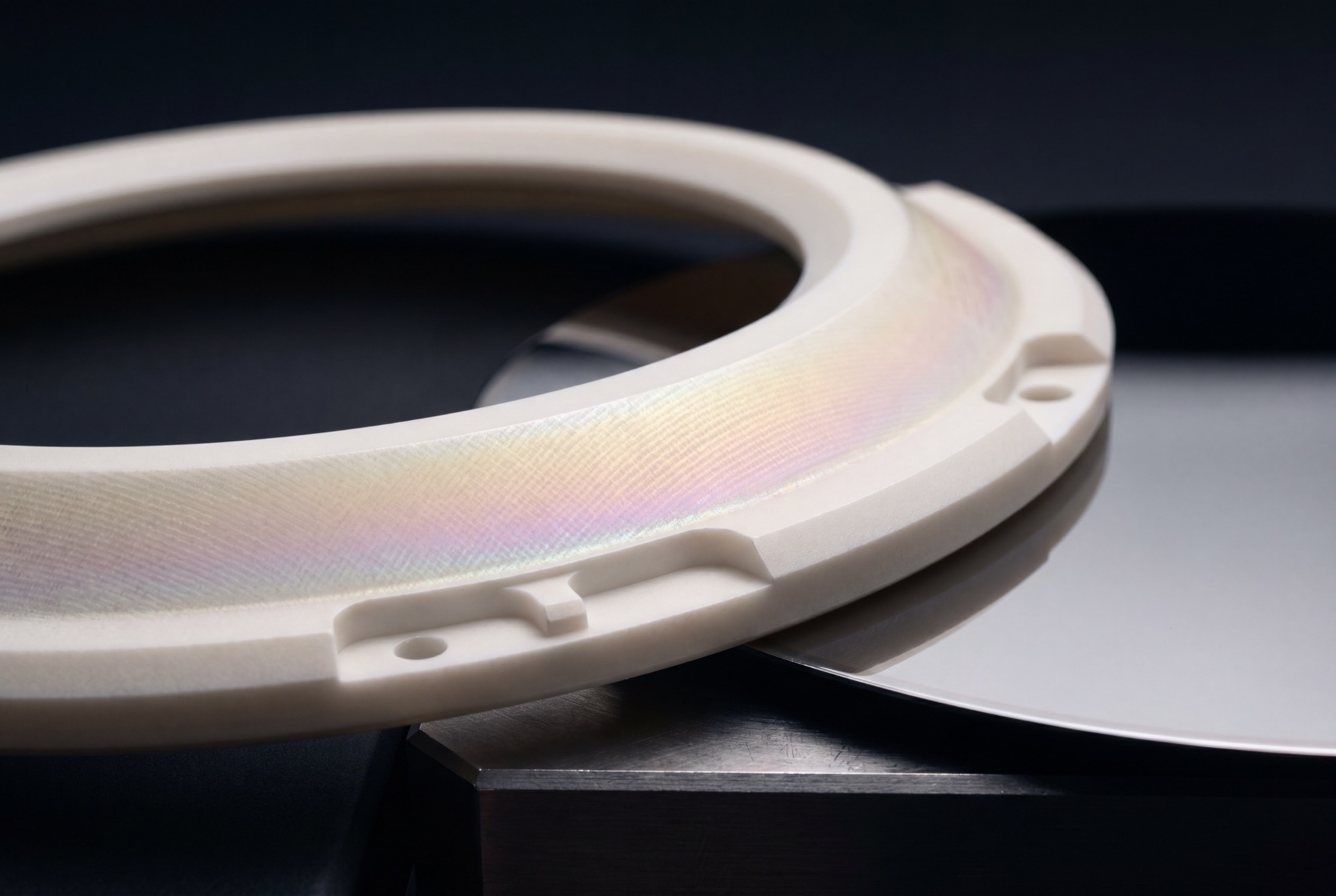
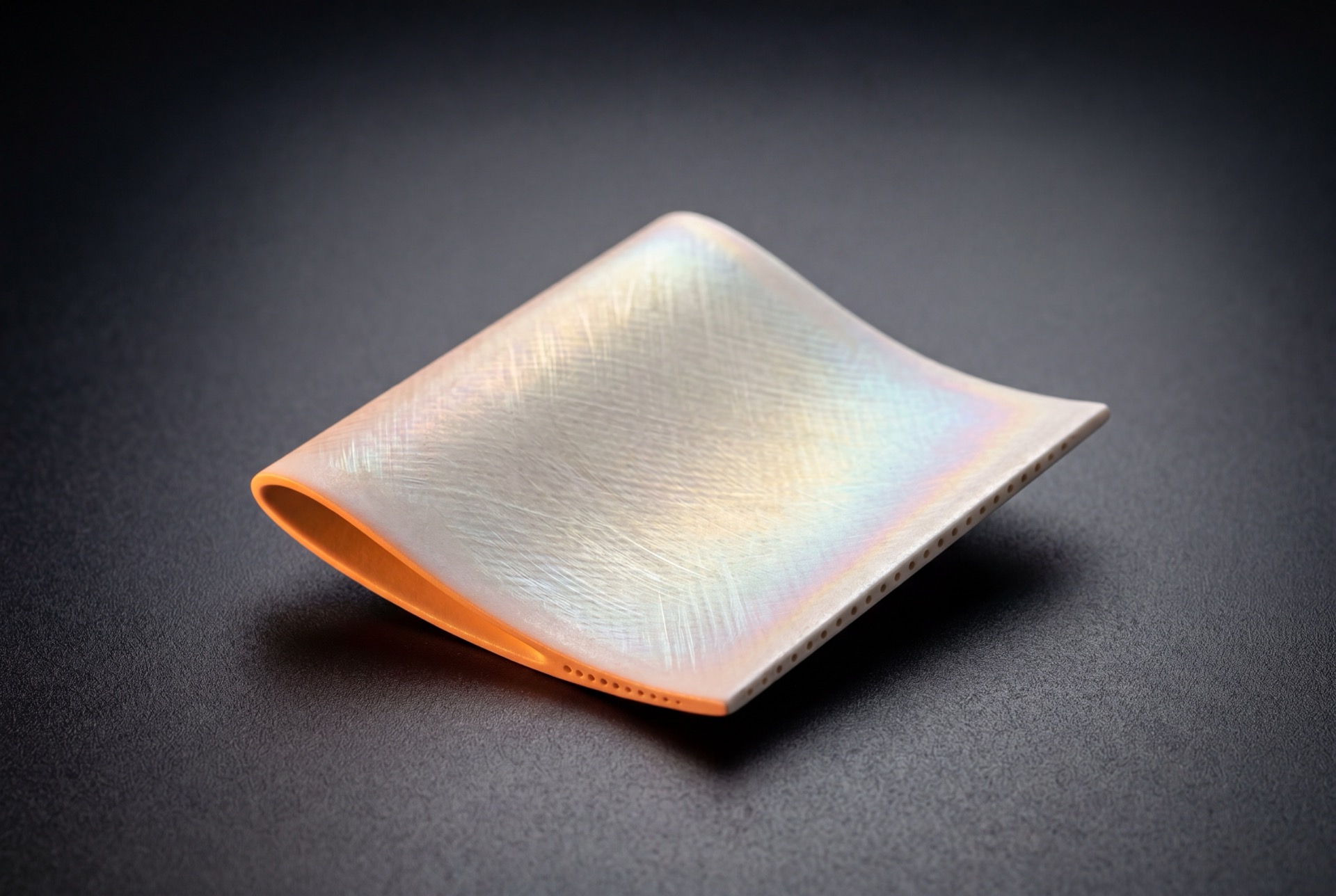
CMC are ceramics reinforced with fibres. They keep the temperature capability of ceramic, but gain the toughness needed to work as real structural parts from the fibers that go into the structure. That is why the newest jet engines use them in the hot section: lighter than metal, stable hundreds of degrees hotter, and needing less cooling air, which turns directly into more thrust and less fuel. The catch is access. Today CMCs are still a black art, locked inside a handful of aerospace primes and national labs, with slow hand processes, proprietary recipes and qualification cycles most companies cannot touch. SEED is turning that craft into an accessible manufacturing platform. We build oxide CMC parts now, and are developing our own continuous single-crystal sapphire fibre, about ten microns across and fine enough to weave, so the next generation of deep-tech startups can design, qualify and buy high-temperature parts without becoming materials companies themselves.
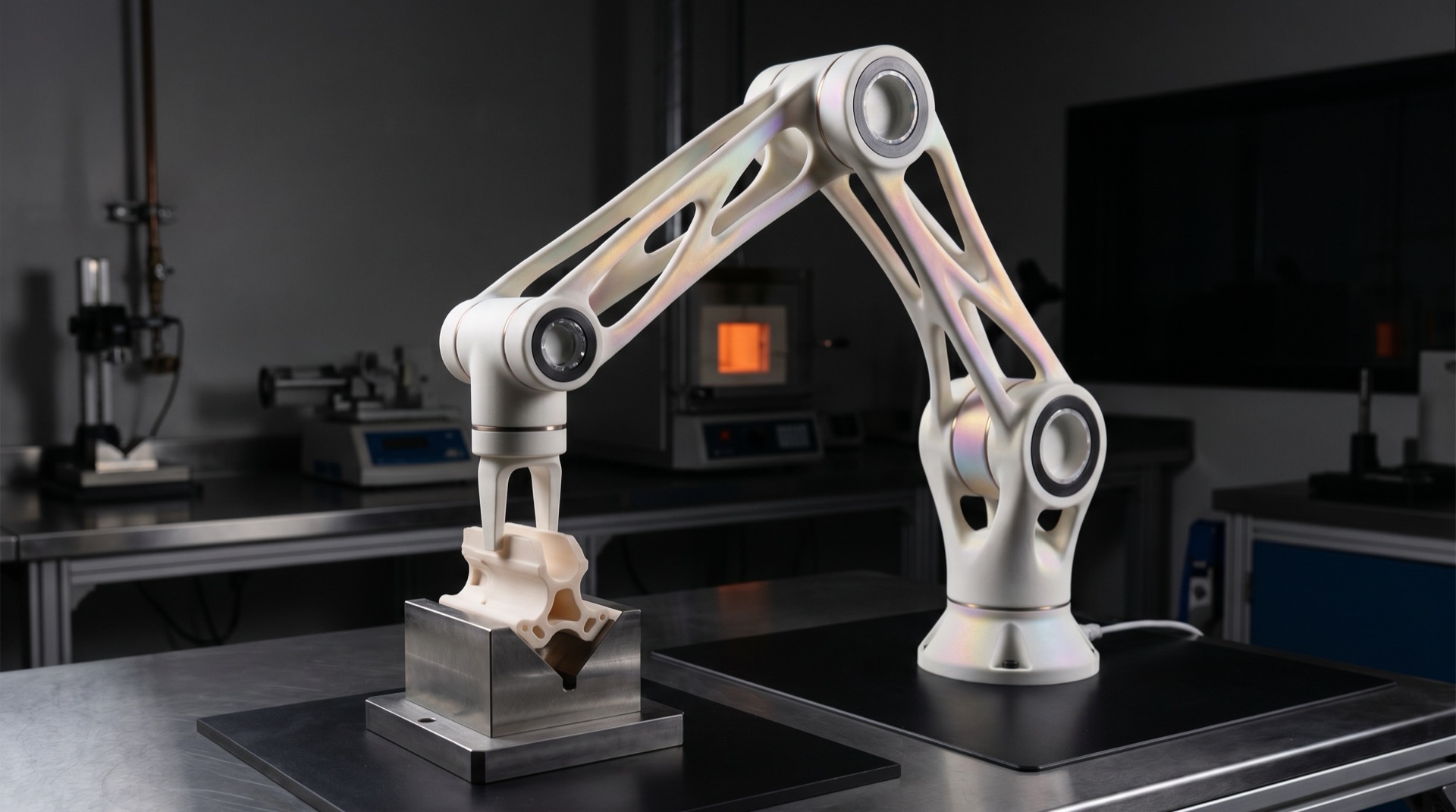
Machines that build the parts
Then the machines that build it. The software turns a load case into a build plan, and an automated cell does the rest: it weaves and layers the cloth, moulds and prints the shape, and CNC-finishes the part. A handful of people run the line, and it is built to make more of its own parts.
Make the mass off-Earth
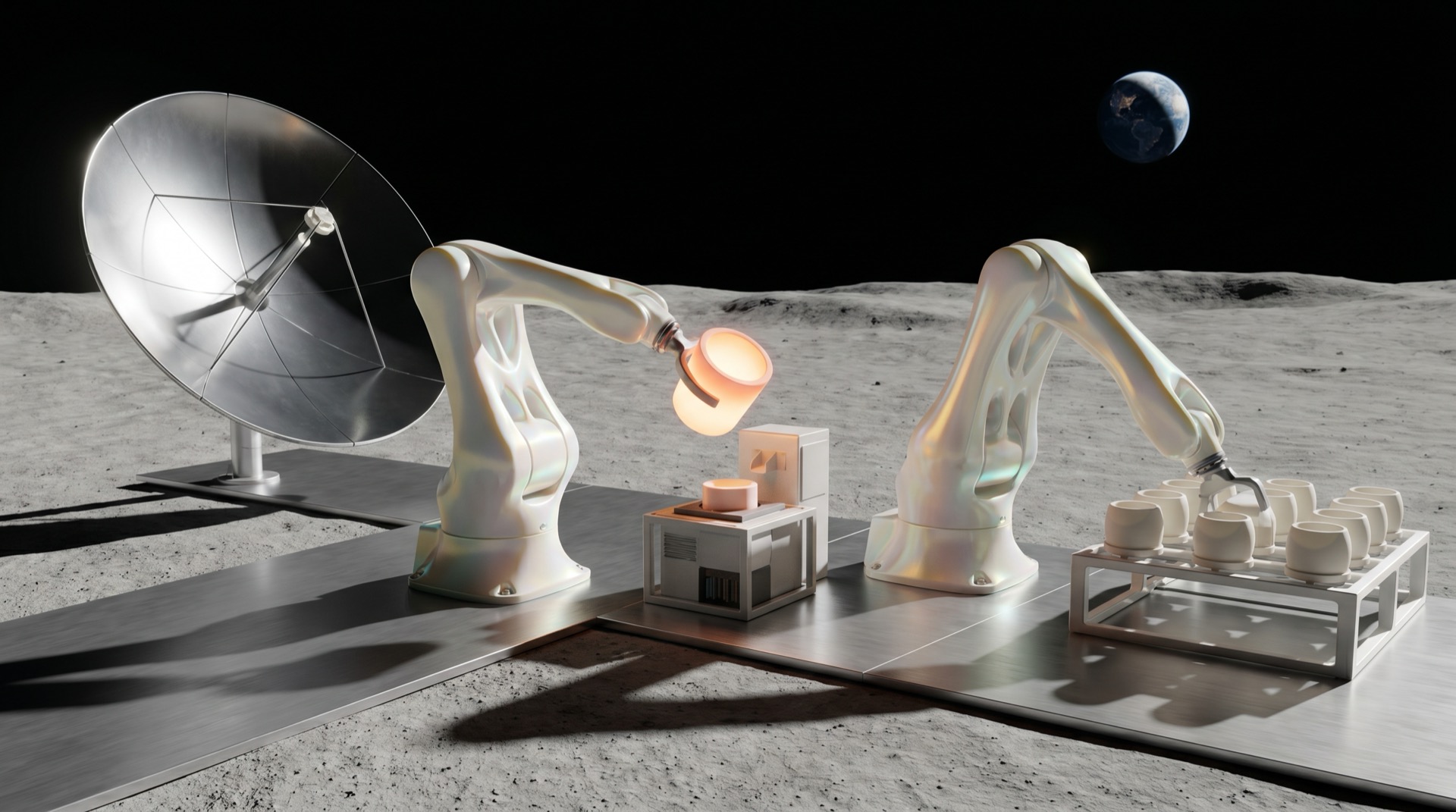
Launch keeps getting cheaper, and that opens the frontier. Flying more often scales what you can lift in a straight line. The mass the frontier needs grows on a curve. The gap between them is the rocket equation: to go anywhere past low orbit, most of what you carry is propellant, and the amount climbs exponentially with how far you push, so a single tonne landed on the Moon can burn many tonnes of fuel to get there. Then it compounds. Every base wants ships, every ship wants fuel, every trip onward wants more fuel still. Demand grows exponentially while launch adds up one rocket at a time, and you cannot out-launch an exponential. The only way through is to make the mass where it is used, the propellant most of all, so each step outward refuels on site instead of dragging its fuel up a gravity well. We turn local rock and sunlight into that mass with robots that build more of themselves. SEED is the supply chain for everything built beyond Earth, and we are proving it on Earth now.
A few common inputs in. Materials, parts, and the machines that make them out. The loop that works on Earth today is the only way anything really big gets built beyond it.
The materials
PaletteMaterials that beat heat. This is the class of ceramic composite the most advanced jet engines now run in their hottest sections. Ceramics survive what melts metal, and ours add the toughness ordinary ceramics lack, so a part keeps working where others fail. Proven oxide ceramics today, with single-crystal sapphire fibre at the frontier, all made to final shape.
The software
In useThe field-to-architecture solver grades every part to its own load, setting fibre angle, fibre fraction and density at each point, and pre-compensating for sintering distortion. Every part is designed and qualified in software.
The robotics
Earth pilotAn automated cell builds the parts: weaving and layering the cloth, moulding, printing and CNC-finishing, all driven by the software. A handful of people run it, and it is built to make more of its own parts.
From the fab to the frontier
See how the impossible part gets made
The material, the software that designs it, and the line that builds it, each proven one step at a time. Explore the technology, or get in touch.