Machines that build the parts
The hard part of making things is rarely the material. It is building them, over and over, with almost no people. Our answer is an automated cell, a simple arm, and precision that lives in the fixtures rather than the robot.
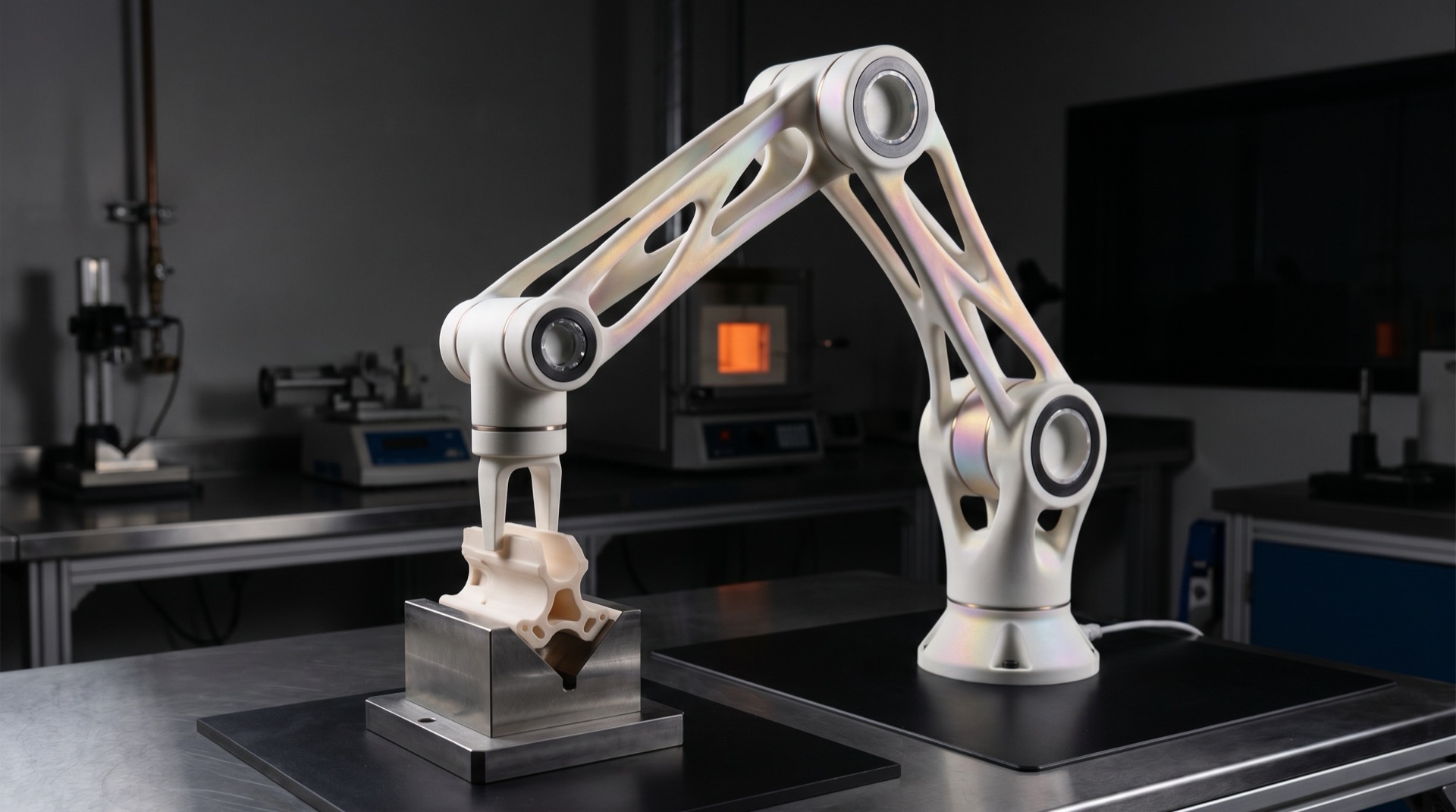
Robotics is how a tiny team builds at scale, and how a factory can one day build more of itself. We keep it deliberately simple and buildable, because in the end the robot has to be made from the same few materials as everything else.
The cell
The software turns a load case into the exact part, and an automated cell builds it. The same cell carries across every material we add. There is no bespoke tooling per part. The design is the program.
The arm, done right
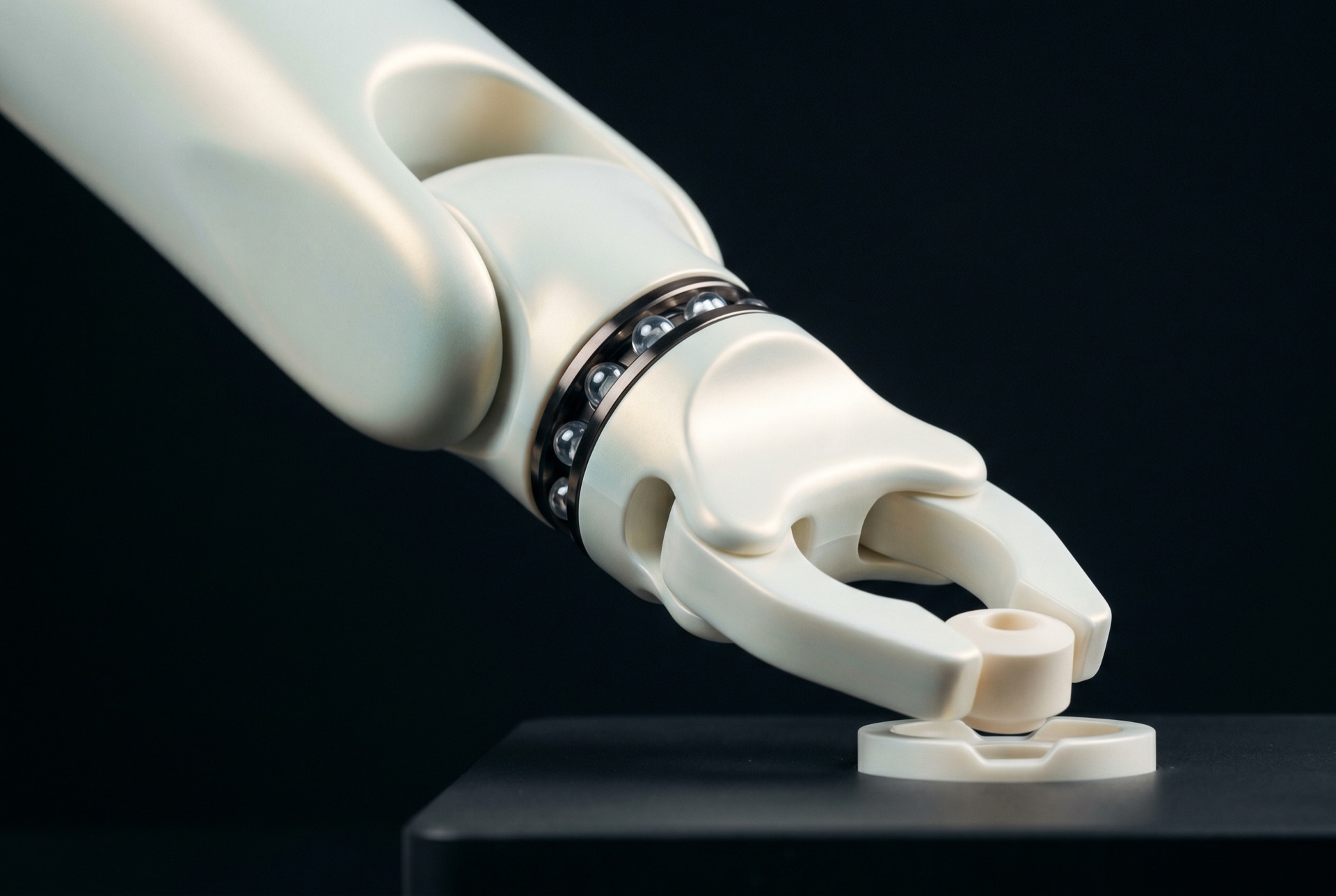
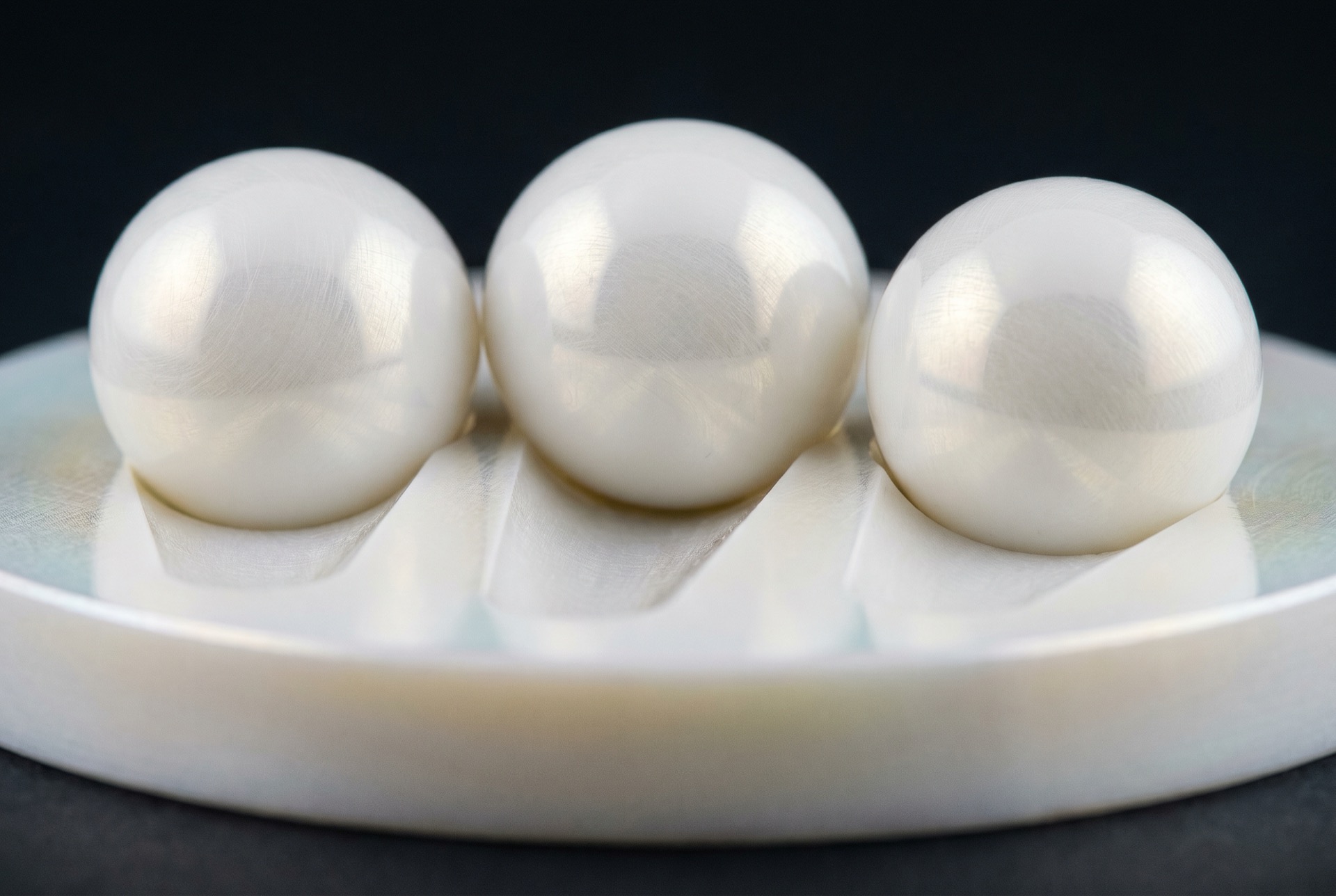
We do not chase a fast, vision-guided, super-dexterous arm. The arm is a porter. It carries a part to a station whose geometry does the precision. Kinematic couplings, three ceramic balls seated in three lapped V-grooves, give micron repeatability passively, with no servo. A simple, locally-buildable arm is enough.
Built from its own ceramic
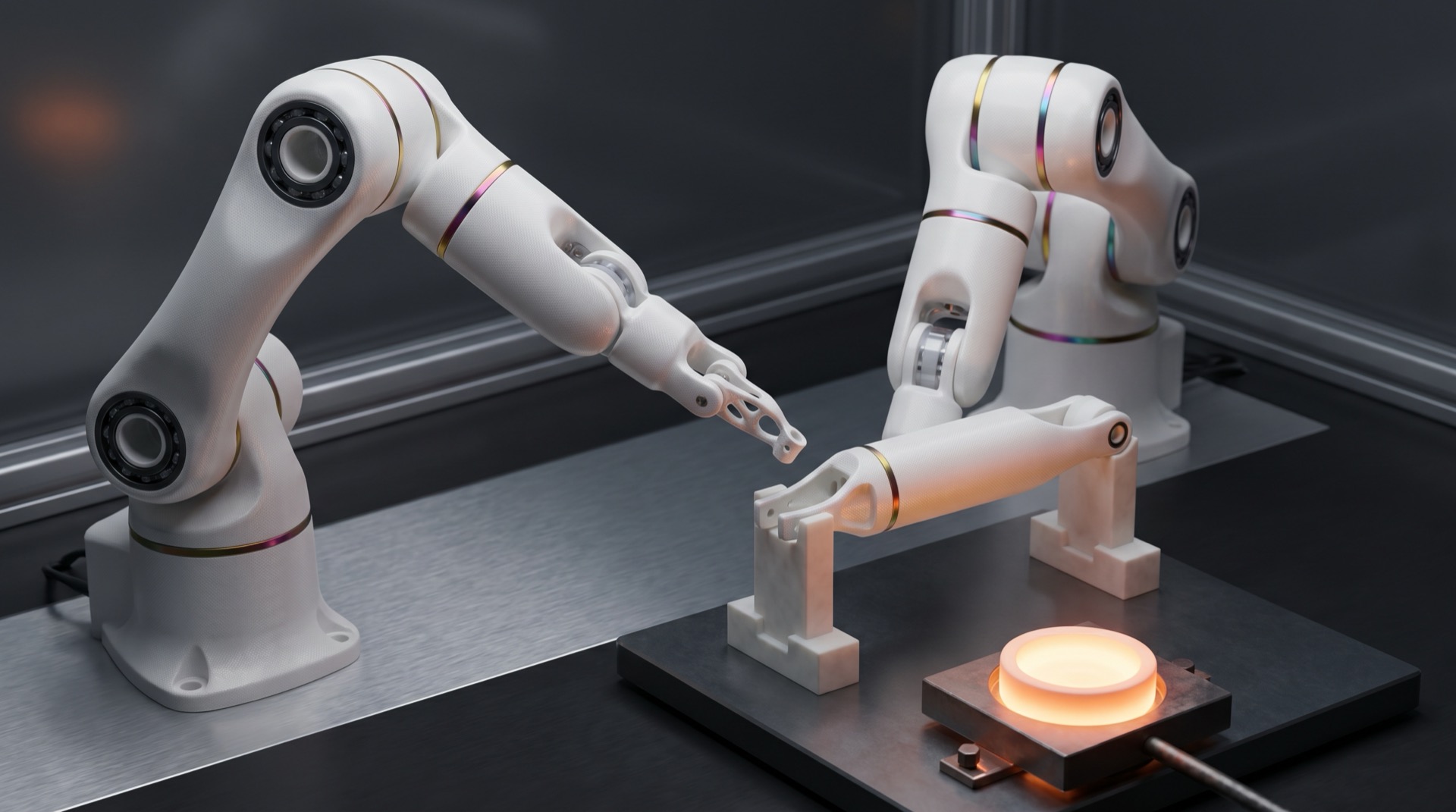
The arm is cast from the same sapphire-fibre ceramic it makes, topology-optimised, running on ceramic bearings. That is the point. A line built from the few materials it produces can, in time, build more of its own parts.
Why it matters
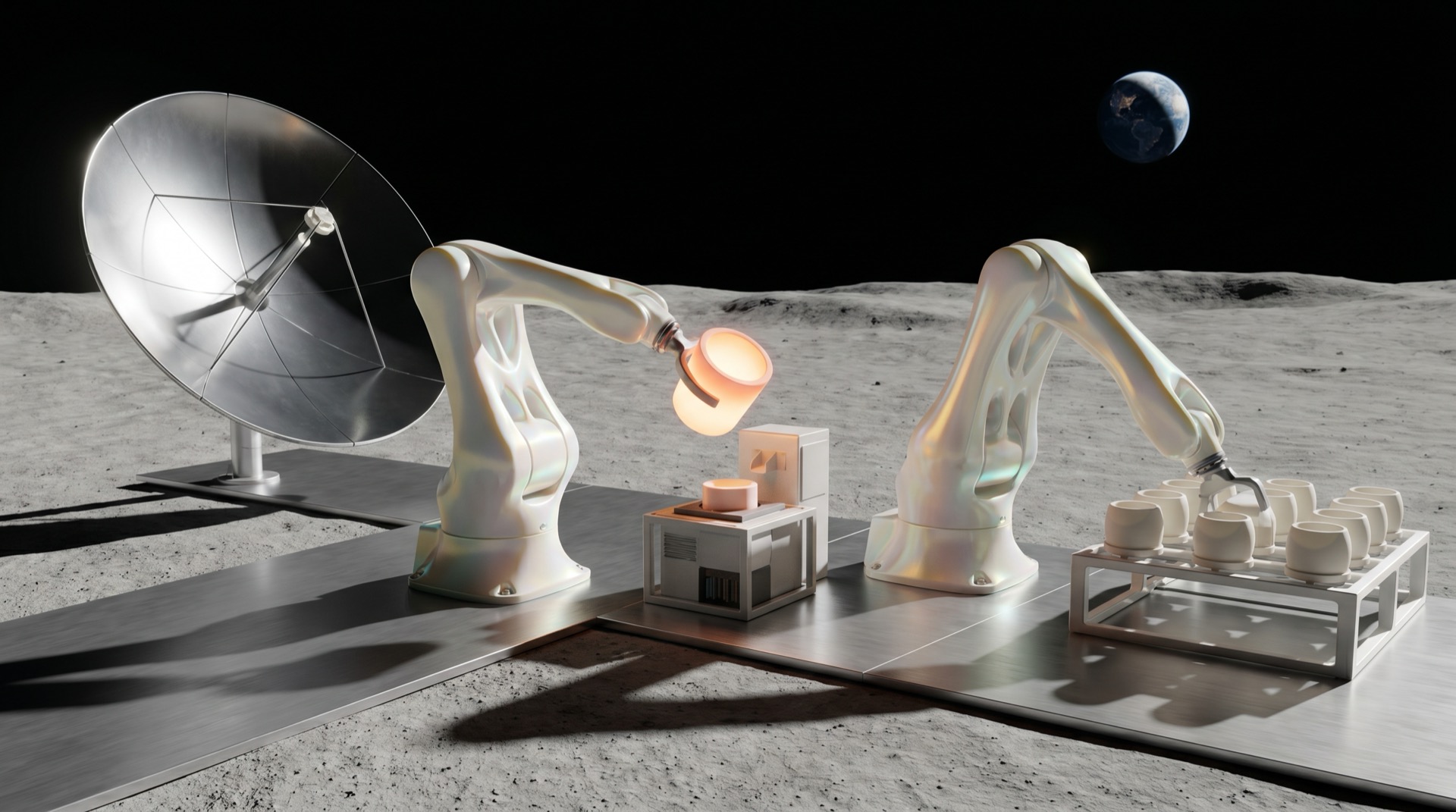
Robots are the labour, and because the line can make more of its own parts, capability compounds instead of adds. Repeatable production that multiplies is what lets a handful of people run the line on Earth today, and the only path to the scale an off-Earth economy needs.
Honest gates
We do not claim it works. We name what we are proving, cheapest first.
Micron repeatability over thousands of cycles, dust included. This is the passive precision the whole approach rests on.
Pre-tested modules snap together fast under realistic control latency. This is the number the build rate depends on, and the cheapest test that could break the plan, so we run it first.
A flight-pattern arm assembles its own parts from local-equivalent stock. This is the recursion that turns "automated" into "builds more of itself".