The case for SEED
A civil materials-and-robotics company with an unusually large ambition. How the company works, the market it serves, the team behind it and where it is going. The full detail is available to qualified investors on request.
A materials company that funds a long game
We are building toward one thing: the supply chain for an off-Earth economy, the materials, the software and the robots to make the mass where it is used. We prove every piece on Earth first, where the same parts already survive the hardest jobs in heat. A large vision, de-risked one shipped part at a time.
Code
Our software designs each part and proves it before anything is made. The advantage is the software and the data it learns from, and every qualified part makes it sharper.
Media
We build in public: the process, the failures, the physics. That attention brings customers, hires and support long before we raise money.
Capital
Capital that compounds. We invest in capability that repeats and extends itself, so each round multiplies output instead of adding headcount. We are built for the exponent, not a budget.
Labour
The robots are the labour, and they repeat. Capability scales with the fleet rather than the payroll: a handful of people, output that compounds. Exponential, not linear.
The window is open
The base is real today. Parts that hold their strength in oxidising heat are needed across semiconductor fabs, civil aviation and power turbines, fusion and industrial heat. That is proof the capability works, with a real market to prove it in.
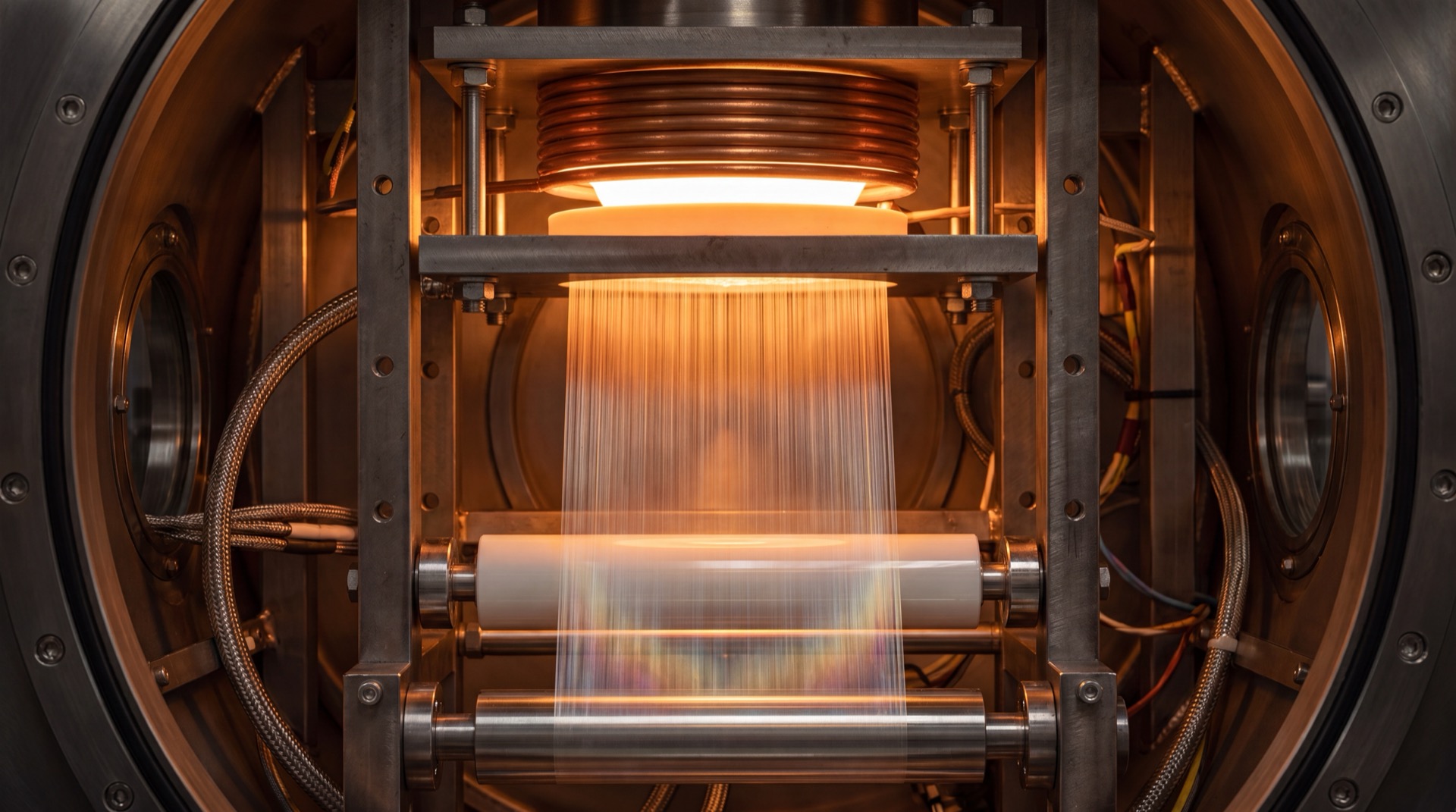
The frontier is finally worth attempting. Cheap second-hand furnaces, routine precision tooling and a compact parallel machine make fine single-crystal sapphire fibre practical to grow at last. Whether it earns its place in real parts is exactly what we are proving, and we do not pretend it is settled.
Cheaper access is a tailwind. As launch gets cheaper, far more gets built in space, and everything built there needs a steady supply of mass that makes no sense to keep hauling up from Earth. Cheap launch creates our market.
Where this goes
Where this goes, stated plainly, with the risk that matters. The full detail is in the brief.
The supply chain off-Earth
As the frontier opens it needs propellant, structure and spares by the tonne, bulk best made on-site rather than hauled up a gravity well. We build that supply chain: materials and robots that turn local resources into mass, and make the next trip go farther. The same stack we prove on Earth.
Imports flat, output compounding
A line that extends itself does not add capacity, it multiplies it. Imports stay flat while output compounds, so capability grows on an exponential curve. That is the only way to reach the scale an off-Earth economy needs.
The one risk that matters
It turns on a single hinge: can a factory make its own control electronics locally? We are built to answer that cheaply, on Earth, long before it could cost a launch.
A category gap above 1200 °C
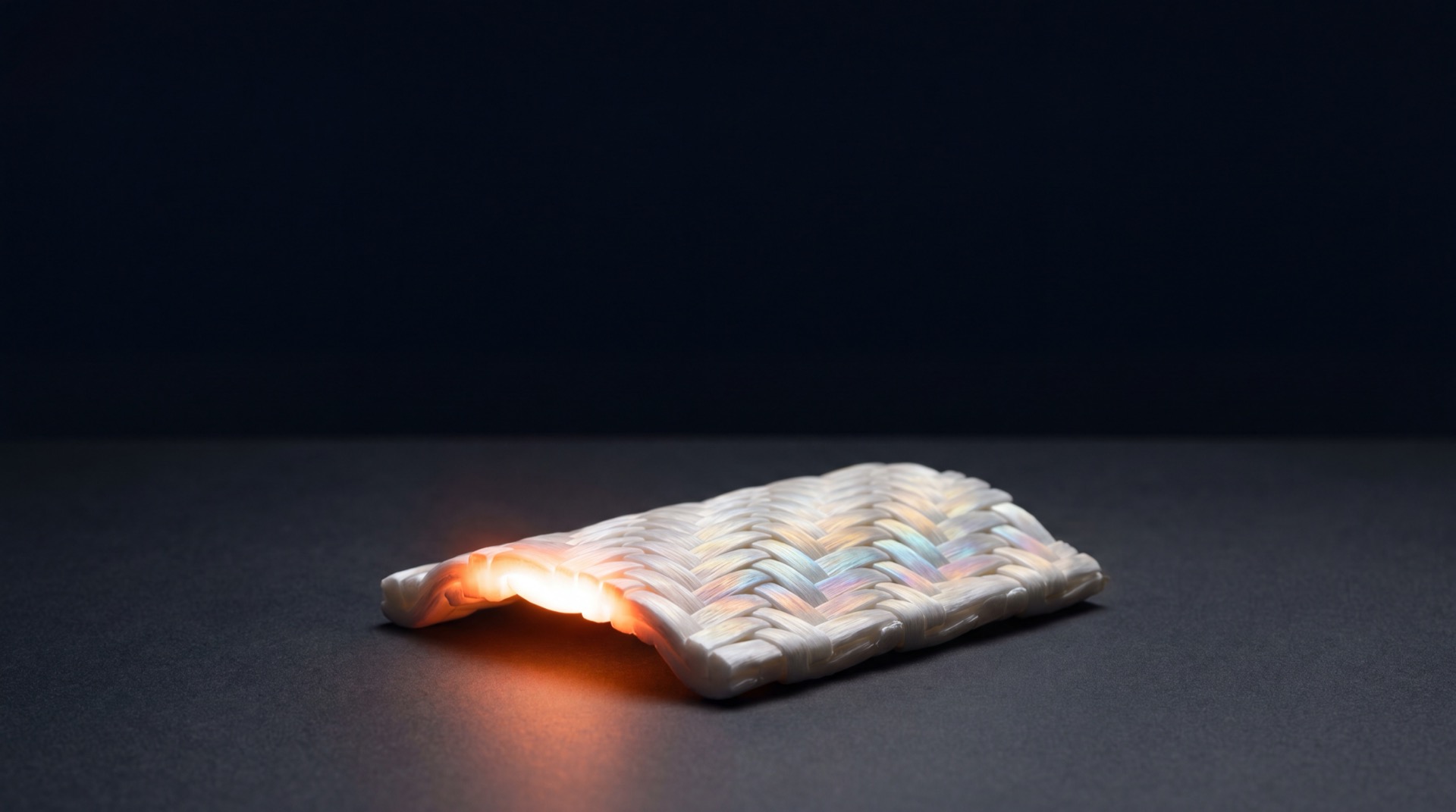
Today's high-temperature fibres each fall short. The weavable oxide fibre softens near 1100–1200 °C, and silicon-carbide fibre is strong but expensive and needs a coating to survive oxygen. Single-crystal sapphire fibre, priced well below silicon-carbide, opens parts nobody can make affordably today.
Prices are published market references and our own launch target, not a quote.
Hard to copy by design
The advantage compounds with every part we make, in the software, the process and the materials science. The detail stays in-house.
Software that compounds
Every qualified part teaches the design software. The library that results is years of work a competitor cannot shortcut.
A process few can run
Growing fine sapphire fibre in parallel and building graded parts from it is hard-won know-how, not something bought off the shelf.
Protected, not disclosed
The edge lives in the craft and the code, kept in-house, never in any single part we sell.
Founder-led and deliberately small until the science is proven. We add people as the work demands. Headquarters in Abu Dhabi (ADGM), with an experimental facility and pilot line in the ASBAŞ free zone, Antalya.
About the companyAn honest, dated ladder: what is proven on the bench, what is next, and the direction beyond.
See the roadmapRequest the investor brief
How it’s built, the plan, the numbers and the team: the full picture for qualified investors, including the lab data behind every claim. Leave your details below and we’ll be in touch within 24 hours.
Prefer email? investors@seedspace.co